
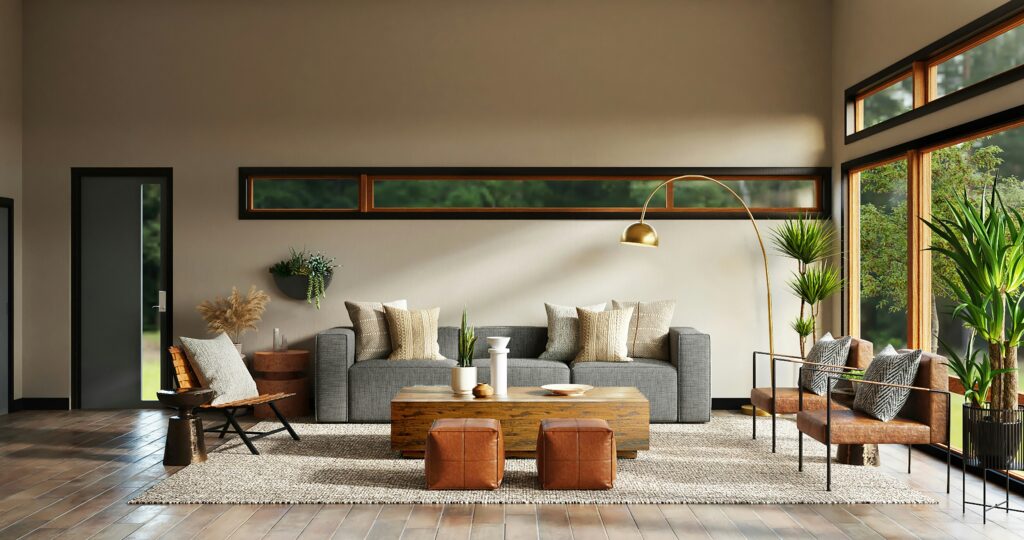
Your home is the one place that should feel entirely like you. Yet many of us live in spaces that feel half-finished, cluttered, or just a little “off,” without knowing why. The good news is that a beautiful home doesn’t need a huge budget or a professional designer. It needs a few smart decisions made in the right order.
Here is a simple, practical guide to get you started.
1. Start With How You Live, Not How It Looks
Before buying a single cushion, ask yourself: How do I actually use this room?
A living room where you watch movies every night needs deep, comfy seating. A room where you host friends needs flexible space and good lighting. Design around your real habits, and the room will feel right every day, not just in photos.
Quick exercise: Write down the top three things you do in each room. Let those guide every choice.
2. Pick a Color Palette and Stick to It
Colors set the mood of your home faster than anything else. A simple rule keeps things balanced: the 60-30-10 rule.
- 60% main color (walls, large furniture)
- 30% secondary color (curtains, accent chairs, rugs)
- 10% accent color (cushions, art, small decor)
If you are unsure where to begin, soft neutrals like warm white, beige, or light grey make a calm base. Then add personality through your accent color.
3. Light It Up in Layers
Poor lighting can make an expensive room look dull, while good lighting can make a simple room glow. Instead of relying on one ceiling light, use three layers:
- Ambient: your main overhead lighting
- Task: reading lamps, desk lights, under-cabinet lights
- Accent: wall lights, candles, or LED strips that add warmth
Choose warm white bulbs for living areas and bedrooms. They feel cozy and welcoming.
4. Let Natural Light Do the Work
Free light is the best decor. Keep windows clear of heavy furniture, and choose light, airy curtains that let sunshine in. A well-placed mirror opposite a window can brighten a room and make it feel bigger instantly.
5. Choose the Right Size of Furniture
One of the most common design mistakes is buying furniture that doesn’t suit the room. An oversized sofa makes a small room feel cramped, while tiny pieces in a large room look lost.
Before you buy:
- Measure your room and your doorways
- Mark the furniture size on the floor with painter’s tape
- Leave about 80 to 90 cm of walking space around main pieces
6. Declutter First, Decorate Second
Even the most stylish room looks messy when surfaces are crowded. Before adding anything new, remove what you don’t use or love.
Try the “one in, one out” habit: whenever something new comes into your home, something old goes out. Add smart storage like baskets, closed shelves, and multi-purpose furniture to keep daily items out of sight.
7. Mix Textures for a Warm, Layered Feel
A room with only smooth surfaces can feel flat and cold. Texture adds depth and comfort. Combine things like:
- A chunky knit throw on a leather sofa
- A jute or wool rug on a wooden floor
- Linen curtains with cotton cushions
- A ceramic vase beside a metal lamp
You don’t need many items. Just a few contrasting textures make a big difference.
8. Bring Nature Indoors
Plants make a home feel fresh, alive, and relaxing. If you are a beginner, start with hardy, low-maintenance options such as snake plants, pothos, or money plants. Even a small green corner on a shelf or windowsill lifts the whole space.
9. Make It Personal
A home that looks like a showroom has no soul. Display things that tell your story: family photos, travel souvenirs, handmade crafts, or favorite books. Group items in odd numbers (three works beautifully) and vary their heights for a styled, natural look.
10. Upgrade the Small Details
You don’t always need a full renovation. Small changes can transform a room:
- Fresh paint on one accent wall
- New cabinet handles or light switches
- Updated cushion covers for each season
- Framed art or a gallery wall
- Better curtains, hung high and wide to make ceilings look taller
A Simple Plan to Begin
Feeling overwhelmed? Take it one room at a time:
- Week 1: Declutter and clean
- Week 2: Choose your color palette
- Week 3: Fix lighting and furniture layout
- Week 4: Add textures, plants, and personal touches
Final Thoughts
Great interior design isn’t about following every trend. It’s about creating a space that feels comfortable, functional, and unmistakably yours. Start small, trust your taste, and enjoy the process. A beautiful home is built one thoughtful choice at a time.