
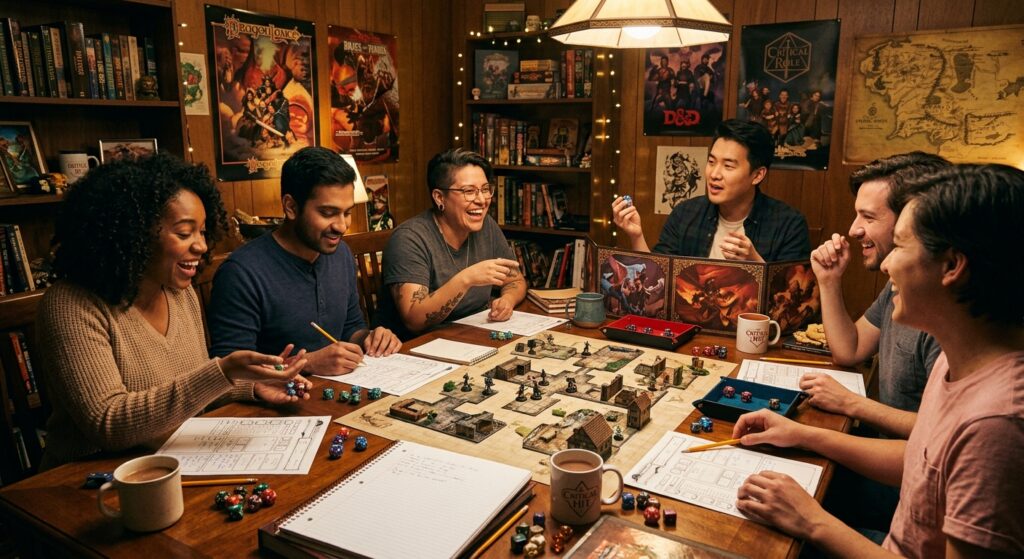
Meta gaming happens when a player uses knowledge their character shouldn’t have — like real-world facts, information from other players, or details learned outside the game — to make in-game decisions. To avoid it, separate what you know from what your character knows, communicate openly with your group, and set clear expectations before play begins.
Every tabletop or roleplay group has faced this moment: a player makes a suspiciously perfect decision, and suddenly the table goes quiet. Someone mutters, “Wait, how would your character even know that?” That’s meta gaming, and it’s one of the fastest ways to pull everyone out of the story.
Roleplay games work because players agree to see the world through their characters’ eyes. The moment a player swaps that perspective for their own outside knowledge, the shared fiction starts to crack. This guide breaks down what meta gaming actually is, why it happens, and practical ways to keep it from derailing your next session.
What Is Meta gaming in Roleplay Games?
Meta gaming is making decisions or using strategies that go beyond the clear rules and boundaries of the game. Instead of acting purely on what a character knows and has experienced, a meta gaming player draws on outside information — things like real-world knowledge, mechanical game knowledge, or insights picked up from other players — to gain an advantage.
A few common examples:
- A character “senses” danger in a room because the player read the module ahead of time.
- A player avoids a trap their character has never encountered, simply because they remember it from a previous playthrough.
- A character suddenly trusts a stranger because the player (not the character) overheard another player’s private conversation about that NPC.
None of these choices come from the character’s lived experience. They come from the player’s knowledge sitting outside the story, which is exactly what makes meta gaming so disruptive.
Why Does Meta gaming Happen?
Meta gaming rarely comes from bad intentions. Most of the time, it’s simply hard to separate what you know as a player from what your character would realistically know. A few common causes include:
Mechanical familiarity. Experienced players recognize patterns in game design — certain monster types, item placements, or quest structures — and instinctively react to them, even when their character has no reason to.
Competitive instinct. In games with win conditions, players sometimes prioritize winning over staying in character, especially under time pressure.
Shared information gaps. When one player learns something privately (through a side conversation with the game master, for example), it’s easy for that knowledge to unconsciously bleed into group decisions.
Simple habit. Long-time players of a system often know its rules so well that they make optimized choices on autopilot, without pausing to consider whether their character would make the same call.
Understanding the “why” matters because it shapes the fix. Meta gaming isn’t usually about cheating. It’s about awareness.
How to Avoid Meta gaming: Practical Strategies
1. Separate Player Knowledge from Character Knowledge
The core skill behind avoiding meta gaming is learning to mentally draw a line between what you know and what your character knows. Before making a decision in the game, ask: “Would my character actually know this, based only on what they’ve experienced in the story?”
This single habit solves most accidental meta gaming. It takes practice, especially for new players, but it becomes second nature over time.
2. Talk About It Before Play Begins
Meta gaming is easiest to prevent when the whole group agrees on expectations upfront. Spend five minutes before a session discussing:
- What counts as meta gaming in your group’s games
- How to handle situations where a player accidentally knows something their character shouldn’t
- Whether minor slip-ups will be corrected in the moment or addressed after the session
Groups that set these norms early tend to have far fewer disputes mid-session, because everyone shares the same definition of fair play.
3. Use In-Character and Out-of-Character Signals
Many groups use simple verbal cues to separate player talk from character talk — saying “OOC” (out of character) before stepping outside the story, for instance. This makes it obvious when someone is speaking as a player versus as their character, which reduces confusion about what information is “in the room” for characters to act on.
4. Let the Game Master Guide Information Flow
Game masters play a key role in preventing meta gaming. If a player learns something their character shouldn’t know — whether by reading ahead, overhearing another table, or simply knowing the system well — the game master can redirect the scene, withhold specific details, or privately remind the player to make decisions based on character knowledge only.
Choose this approach if your group values immersion and story consistency over strict competitive fairness, since it relies on trust between the game master and the players.
5. Build In Natural Consequences
Sometimes the clearest way to discourage meta gaming is to let suspiciously convenient choices play out with in-story consequences. If a character “mysteriously” avoids every trap, a game master might introduce a complication that tests whether the player is truly reasoning as their character, or simply playing the odds.
This method works well for experienced groups who enjoy a bit of narrative push-back rather than direct correction.
6. Reflect After Sessions
Occasional check-ins after a session help the group catch patterns that might not be obvious in the moment. Ask: “Were there any points where it felt like someone’s character knew more than they should have?” This kind of light, judgment-free reflection builds self-awareness over time rather than putting any one player on the spot.
Meta gaming vs. Strategic Thinking: What’s the Difference?
Not every clever decision counts as meta gaming. Choose a straightforward test: if the reasoning comes from something the character has witnessed, learned, or logically deduced within the story, it’s legitimate strategy. If the reasoning comes from something only the player knows — a rulebook detail, a spoiler, or private information from another table — it’s meta gaming.
For example, a character who deduces a trap exists because they’ve noticed the floor looks disturbed is thinking strategically. A character who avoids a trap because the player remembers it from a walkthrough video is meta gaming. The difference lies in the source of the knowledge, not the cleverness of the decision.
Keep the Story Fair and Fun for Everyone
Meta gaming isn’t about bad players or broken games. It’s a natural side effect of the fact that players and characters don’t share the same knowledge, and keeping those two perspectives separate takes conscious effort. The good news is that most meta gaming issues clear up quickly once a group talks openly about expectations and builds a few simple habits, like checking “would my character know this?” before acting.
Start your next session with a short conversation about what meta gaming means for your table. That five-minute discussion can save hours of mid-game frustration and keep everyone immersed in the story you’re building together.